The NATIONS DIGEST reports that the Federal Government has commenced plans to seek compensation from the government of South Africa for Nigerians who were forced to abandon businesses and properties amid renewed xenophobic tensions in the country.
Officials said affected Nigerians have been asked to provide detailed documentation of all movable and immovable assets left behind, including businesses, vehicles, shops and other investments, to support future claims for compensation.
According to government representatives, the evacuation exercise would not end with merely bringing citizens back home, as efforts would continue to ensure that Nigerians do not lose investments built over several years.
Authorities explained that the documented assets would be presented to the South African government as part of discussions aimed at securing possible compensation for affected citizens.
The Federal Government also maintained that the majority of Nigerians living in South Africa are legal residents who entered the country through legitimate immigration channels.
Officials argued that delays in the processing and renewal of immigration documents by South Africa’s Home Affairs system had left many foreign nationals, including Nigerians, trapped in administrative backlogs despite initially arriving legally.
They noted that many residence permit applications had remained unattended to for years, making it unfair to categorise affected Nigerians as undocumented migrants.
Meanwhile, 269 Nigerians arrived in Lagos aboard the third evacuation flight approved by President Bola Ahmed Tinubu for citizens wishing to voluntarily return home.
The latest batch forms part of five evacuation flights approved by the President following the screening and clearance of more than 1,000 Nigerians by the Nigerian High Commission in Pretoria.
The flights are being operated by Air Peace as part of the government’s emergency evacuation efforts.
Receiving the returnees, officials of the Ministry of Foreign Affairs reassured Nigerians abroad of the government’s commitment to their safety and welfare.
The Ministry also confirmed that evacuation operations would continue beyond the June 30 deadline announced for undocumented foreigners to leave South Africa, adding that more flights are expected in the coming days.
Nigerians still awaiting evacuation were advised to remain calm, avoid protest flashpoints and maintain close contact with the Nigerian High Commission for updates and support.
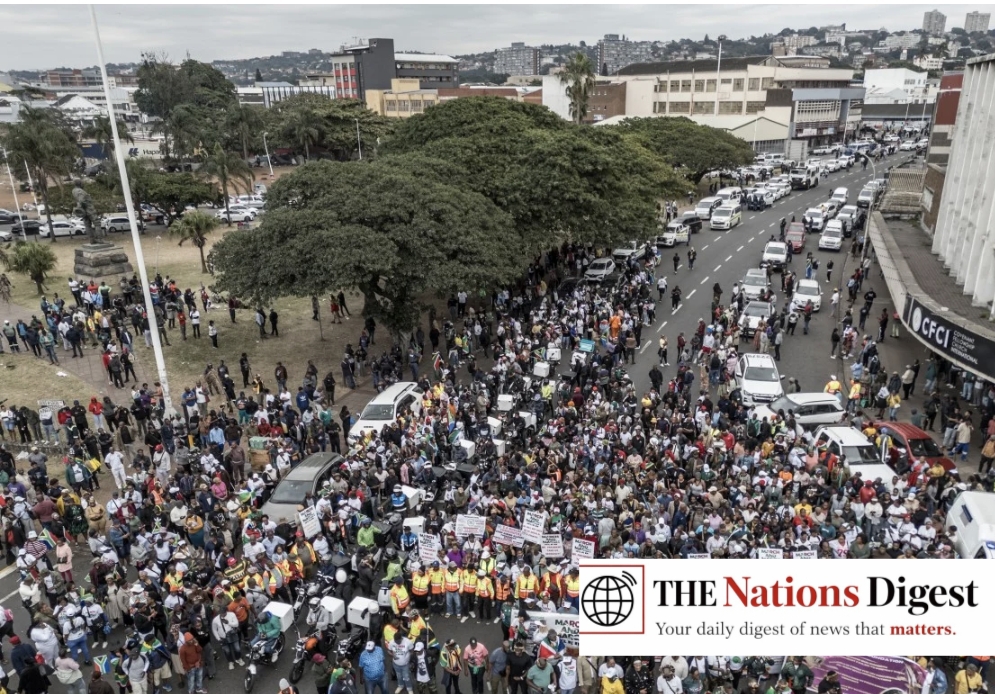
Despite fears of violence, Nigerians residing in South Africa reported that the June 30 demonstrations remained largely peaceful due to a massive security deployment by authorities.
South Africa launched one of its largest domestic security operations in recent years, deploying thousands of law enforcement officers, drones, helicopters and extensive surveillance infrastructure across Gauteng Province to prevent a repeat of the deadly unrest witnessed in 2021.
The protests, organised by anti-illegal immigration groups, had raised concerns over possible attacks on foreign nationals and businesses in key economic regions including Gauteng, KwaZulu-Natal and the Western Cape.
A Nigerian resident in Johannesburg said businesses were shut and many residents stayed indoors due to fears of violence and looting, but heavy military presence prevented attacks on foreign-owned properties.
He appealed to the Federal Government to deploy additional evacuation flights, noting that thousands of Nigerians remained stranded and were willing to return home.
Similarly, leaders of Nigerian community groups in South Africa insisted that many Nigerians in the country own legitimate businesses, have families and contribute significantly to the South African economy.
They argued that while some Nigerians had opted for voluntary repatriation, many others intended to remain in the country and continue their lives legally.
Community leaders also blamed South Africa’s immigration processing challenges for the growing number of undocumented migrants, insisting that delays in permit renewals had pushed many otherwise legal residents into irregular status.
They called for an end to recurring xenophobic attacks and urged Nigerians remaining in South Africa to stay alert, avoid confrontations and continue to obey local laws while the situation stabilises.
South African President Cyril Ramaphosa has repeatedly appealed for peaceful protests and warned that violence and criminal acts would not be tolerated.

He also served as Deputy Editor at Sahara Reporters Sports and worked as Content Manager for the Nigeria Women Football League (NWFL), contributing significantly to sports journalism and digital content development in Nigeria.
Known for his strong storytelling ability and editorial expertise, Olayinka Olawole has covered a wide range of subjects, while also building a reputation in digital storytelling, audience engagement, and content optimisation for online and media platforms.
- Gov. Adeleke Moves to Attract Sports Industry Investment to Osun. - September 27, 2026
- World Cup Qualifiers: D’Tigers Show Fighting Spirit Against Cameroon as NBBF President Kida Backs Team for a Quick Rebound. - August 28, 2026
- Ace Sports Celebrates the Wife of the Governor of Osun State, Erelu Ngozi Abeni Adeleke, on Her Birthday. - August 28, 2026